Interlocking Brick Maintenance Year-Round
Ask a Question
Send us a note and we'll get back to you — usually within one business day.
Year-round interlocking brick maintenance comes down to keeping the stones clean, keeping sand in the joints, and keeping water from sitting on or under the pavers. For GTA homeowners, the goal is to stay ahead of freeze-thaw cycles, road salt, spring rain and summer sun before they loosen stones, fade colour or feed weeds. A little attention each season costs far less than repairing a settled or shifted driveway, walkway or patio.
How GTA weather wears down interlocking brick
Interlocking pavers are tough, but they sit outside through every extreme southern Ontario sends their way. Freezing and thawing is the biggest threat. When water seeps into the joints and then freezes, it expands and presses against the sides of the pavers. Repeat that over a few winters and stones can loosen, shift or settle out of level.
Road salt makes winter harder on the surface. Salt and brine get tracked onto driveways and walkways, where they attract moisture and leave a dull, white residue. Over time, that crust can roughen the finish and draw more water into the surface.
Spring brings its own problems. Rain saturates the joints right when clay-heavy GTA soil drains slowly, so water can pool and sit around the stones longer than it should. Where drainage is poor, that trapped water softens the base and gives weeds room to take hold in the joints.
Summer adds strong UV light. Unsealed pavers fade, and areas that never see shade can look washed out next to sections that are partly covered. The seasonal wear is predictable, which makes it easier to plan around:
- Freeze-thaw cycles loosen joints and shift stones out of level
- Road salt and brine leave residue that attracts moisture
- Spring rain saturates joints on top of slow-draining clay soil
- Summer UV fades colour and dries out unprotected surfaces
A seasonal maintenance routine that actually helps
Spring is the time to take stock. Sweep away leftover grit and salt, rinse the surface, and look for stones that shifted or sank over the winter. Pulling weeds now, before they set deep roots, stops them from widening the joints.
Summer is mostly about regular sweeping and fast stain cleanup. Remove leaves, dirt and grass clippings before they break down and stain the surface, and blot spills rather than scrubbing them deeper into the stone.
In fall, prepare for freeze-thaw. Sweep leaves out of the joints, clear debris from drains and downspouts, and make sure water moves away from the surface instead of pooling. The drier the pavers go into winter, the less damage freezing can do.
Winter is mainly about snow and ice. Use a plastic shovel rather than a metal blade, which can scrape the pavers, and clear snow before it gets packed into ice. If you use salt or de-icer, apply the lightest amount that works and plan to rinse the surface once spring arrives.
When cleaning, re-sanding and sealing fit in
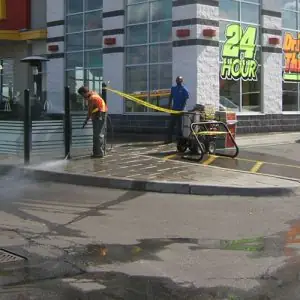
Good maintenance is mostly cleaning and keeping the joints full. A thorough power washing removes the dirt, mildew and old residue that sweeping alone cannot reach, and pulling weeds before they seed stops them from coming back stronger.
Re-sanding matters just as much. The sand between the pavers is what locks them in place, so when it washes out the stones begin to shift. Topping up the joints after cleaning restores that stability and leaves fewer gaps for weeds.
Sealing is the final protective step for many surfaces. It helps repel water and stains, keeps joint sand in place and slows fading. Our interlock driveway, walkway and patio cleaning, re-sanding and sealing service treats all three steps as one job, so the surface is clean and stable before any sealer goes on. If you are deciding whether sealing suits your particular pavers, our interlocking brick sealing guide explains what sealing does and does not do — and we are always happy to tell you whether it suits your surface.
Signs your interlock needs more than a quick sweep
Some problems are cosmetic, but others warn that water is getting where it should not. Watch for:
- Joints that sit empty or keep washing out after rain
- Stones that wobble, tilt or sink in one spot
- Water that pools and stays long after the rain stops
- Weeds or moss filling the joints
- Faded or patchy colour that no longer matches
- A white, crusty residue left behind by winter salt
One or two small issues are usually easy to correct. Several together often point to a drainage or base problem, and that is worth having a professional look at before the pavers shift further.
Frequently Asked Questions
How often should I sweep and rinse my interlock?
Light sweeping whenever the surface looks dirty is plenty for most weeks, with a deeper rinse a couple of times a year. Sweep more often in fall, when leaves collect in the joints, and give the surface a good rinse after winter to clear away salt.
Does interlock need to be sealed every year?
No. Sealing is a periodic step, not an annual one. How long a sealer lasts depends on traffic, salt exposure and how much sun the surface gets, so re-seal as the finish starts to wear rather than on a fixed calendar. If you are unsure whether your pavers are due, ask us whether it suits your surface.
Can I use table salt or ice melter on the pavers?
De-icing products vary, and many leave a residue that holds moisture against the surface. Use as little as you need, sweep up what remains, and rinse the pavers in spring. If a particular product has left a crust or dullness, ask us whether it suits your surface before treating it further.
Should I pull weeds myself or have the joints re-sanded?
Pulling young weeds helps right away, but if the joint sand keeps washing out, re-sanding is the real fix. Removing weeds and then topping up the sand stops them from returning as quickly and keeps the stones stable.
Seal Tech Inc. serves Scarborough and the GTA. Call (416) 966-4200 for a free written quote, or contact us to send photos with your quote request.