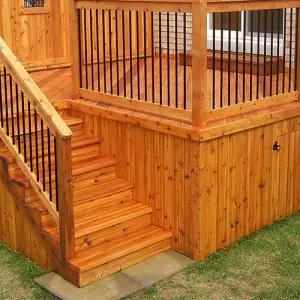
Staining a Cedar Deck or Fence

Ask a Question
Send us a note and we'll get back to you — usually within one business day.
Cedar stains best when the wood is clean, dry and free of old flaking finish, and when the stain is a penetrating product with enough pigment to block the sun. Start by cleaning the surface, wait for a dry stretch of weather and for the wood itself to dry out, then apply thin, even coats that soak into the grain rather than sitting on top of the board. The same order works for a cedar fence, deck or pergola.
Seal Tech Inc. has handled cedar deck and fence staining and sealing across Scarborough, Toronto, North York, Markham, Vaughan and the rest of the Greater Toronto Area for more than 15 years. The steps below matter because cedar behaves differently from pressure-treated pine and needs a finish matched to how it is used and where it sits.
Why Cedar Stains Differently
Cedar is a soft, naturally rot-resistant wood with its own oils and tannins. Those qualities are why an untreated cedar fence can stand in a wet Toronto backyard for years, but they also change how a stain behaves. Cedar is porous, so it drinks up penetrating stains readily, yet the natural oils in the wood can interfere with some finishes, and the tannins can bleed through pale or solid colours as dark marks.
Bare cedar also greys quickly. That silver-grey is not rot; it is the sun bleaching the surface fibres. A stain with pigment slows that bleaching far better than a clear sealer, because the pigment sits in the finish and blocks UV before it reaches the wood.
Staining a Cedar Deck vs. a Cedar Fence
A cedar deck and a cedar fence need slightly different thinking, even with the same stain.
- Decks sit horizontally, so snow, rain and road salt linger on the surface instead of running off. The boards take foot traffic and furniture movement too, so the finish has to penetrate well and hold up to wear.
- Fences dry faster because they are vertical, but every face catches wind and rain, and the bottom of a fence stays damp where it sits near soil, grass or gardens.
- Both need clean, dry wood first. A deck that is power washed on Friday and stained on Saturday can fail because the boards are still wet inside.
Preparing Cedar for Stain
Preparation is where a cedar stain job is won or lost. The finish can only soak in and bond if the surface is clean and dry.
- Clear the area. Move planters, furniture and anything leaning against the fence, and trim plants back so you can reach every board.
- Wash the wood. Power washing removes dirt, mildew and the greyed surface fibres. The pressure and tip matter on cedar, which is soft and can be furred or scarred by a too-aggressive wash.
- Let the wood dry. Cedar that has been washed or rained on needs dry weather to reach the right moisture level before stain goes on.
- Deal with the old finish. If the previous stain is still sound and clean, you can often recoat over it. If it is flaking or peeling, it has to be removed first — ask us whether your surface suits stripping, sanding or a straight recoat.
Once the wood is ready, the stain should go on in a stretch of dry, mild weather, following the product’s temperature and dry-time guidance. Thin coats that soak in beat one thick coat that sits on top and peels later.
What GTA Weather Does to Cedar
Cedar faces a harder year in Toronto than almost anywhere else in Canada, and each season pushes the wood in a different direction.
Winter freeze-thaw. Snow and rain soak into the surface, then freeze overnight and expand inside the fibres. That cycle is what splits and cracks boards from within, and it is a big reason penetrating stains hold up better around Toronto than thick films that crack with the wood.
Road salt. Salt gets tracked onto decks on boots and spread near walkways and driveways, drawing moisture into cedar and speeding up drying and greying. A rinse in early spring keeps salt from sitting on the boards all season.
Spring rain. GTA springs are long and wet. Where the clay soil common to Scarborough and much of the GTA drains slowly, water can pool around deck posts, under low decks and at the base of fences. Wood that stays damp against the ground rots faster than anything the sun does to it, so drainage and ground clearance matter as much as the stain on top.
Summer UV. The sun is the fastest grey-maker. South- and west-facing fences and decks fade first, which is why a tinted or semi-transparent stain usually outperforms a clear sealer on cedar.
Choosing a Stain for Cedar
Cedar takes nearly any type of stain, but the best choice balances how much grain you want to see against how much protection the wood needs.
- Clear or natural tones show the most cedar grain but carry the least pigment, so they offer the least UV protection. They suit sheltered wood but fade fastest in full sun.
- Semi-transparent stains are the middle ground many GTA homeowners choose: you still see the grain, and the pigment blocks enough UV to slow the greying.
- Solid stains hide the grain almost entirely and hold colour the longest, but they sit more on the surface and need the wood properly prepped so they do not peel.
There is also the question of oil-based versus water-based product, which changes drying time, odour, penetration and cleanup. Our guide to oil vs water-based deck stain walks through how each one behaves in Toronto weather. For your particular boards, the age of the wood and what is already on it matter more than the label on the can — ask us whether it suits your surface before you buy.
Frequently Asked Questions
How often should I re-stain a cedar deck or fence?
It depends on exposure more than the calendar. A shaded, protected fence may hold colour for a long time, while a south-facing deck in full sun can start to look washed out much sooner. Watch for the finish losing its colour and water no longer beading on the surface — that is the signal to recoat.
Do I need to strip the old stain before re-staining?
Not always. If the existing finish is sound, clean and well adhered, you can often clean the surface and recoat over it. If the old stain is flaking, peeling or worn through to bare wood in patches, those areas have to be addressed first or the new coat will fail the same way. Ask us whether your surface suits a recoat or needs more work.
Can I stain a brand-new cedar fence right away?
Usually it is better to let new cedar settle. Fresh cedar can hold extra moisture, and its surface may need a light clean before it will accept stain evenly. A short wait and the right preparation give a much more even finish. Ask us whether your new fence is ready to stain.
Why does my cedar deck turn grey even though it was stained?
Grey cedar is the sun bleaching the surface. A clear sealer or a very light stain carries little pigment, so UV reaches the wood and greys it fairly quickly. A stain with more pigment — a tinted or semi-transparent finish — blocks more UV and keeps the colour noticeably longer.
Seal Tech Inc. serves Scarborough, Toronto, North York, Markham, Vaughan and the rest of the GTA. Call (416) 966-4200 for a free written quote, and we will help you choose and apply the right stain for your cedar deck or fence.