How to Remove Old Deck Stain
Ask a Question
Send us a note and we'll get back to you — usually within one business day.
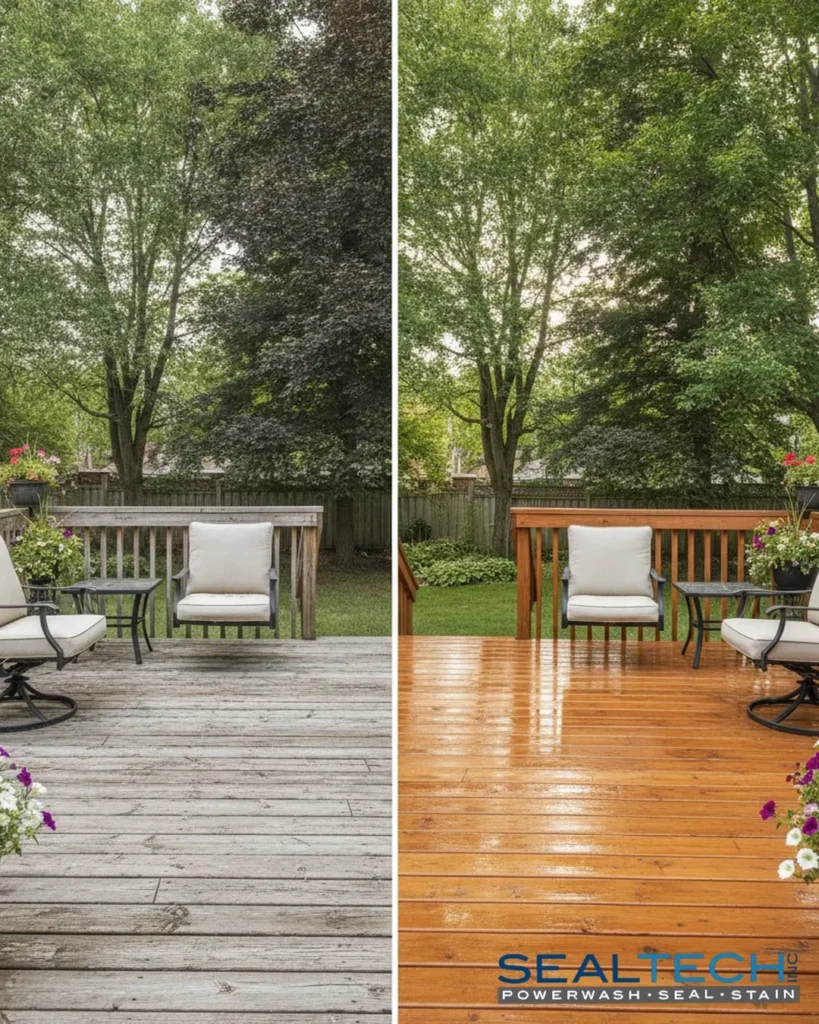
Removing old deck stain is about getting the worn-out finish off the wood so a fresh coat has something sound to grip. You can do it with sanding, a chemical stain stripper or careful power washing — most decks need some combination — followed by a thorough clean and a full dry. Skipping the removal step is the fastest way to have the new stain peel within a season.
Why Old Stain Has to Come Off
New stain does not bond to old, failing stain — it bonds to the wood, and only as well as whatever is left on the surface. When an old coat is peeling, chalky or turning grey, the finish underneath is already letting go, so anything applied on top will let go with it. Old coats also trap moisture against the boards, which softens the wood and invites rot over time. This is the same bond failure we cover in our guide on why deck stain peels and how to fix it.
Three Ways to Remove Old Deck Stain
Most GTA decks respond to one of three approaches, and many need a mix of two:
- Sanding. A belt or orbital sander, working from coarse to fine grit, removes the top layer of finish along with the grey, weathered wood beneath it. It is dusty but precise, and it works well on smaller decks and handrails.
- Chemical stain stripper. A deck stripper is brushed or sprayed on and left to soften the old finish, which is then scraped and rinsed away. It reaches into the grain where sanding and washing cannot, which helps on heavily coated or film-forming finishes.
- Power washing. A pressure washer lifts loose, flaking stain quickly on sound boards. The risk is using too much pressure or holding the nozzle too close, which can gouge the wood and drive water deep into the grain.
The right method depends on the product already on the deck, the condition of the boards and how much finish is left. Some products respond better to one approach than another. If you are not sure what you are working with, ask us whether it suits your surface before you start.
How GTA Weather Affects the Job
Southern Ontario weather decides both when to strip a deck and how quickly the wood re-weathers if you wait. In winter, freeze-thaw cycles do the most damage: water works into tiny cracks in the finish, freezes and expands, and widens those cracks a little more with every cycle. That is why stain often fails first at board ends and around fasteners. Road salt tracked onto decks from boots and vehicles dries out the finish and leaves a white, chalky haze that holds moisture against the wood.
Spring brings long stretches of rain that keep boards swollen and damp for weeks — the worst condition for stripping or staining, because waterlogged wood will not accept a new finish. Summer adds strong UV, which bakes old stain brittle and grey, but it also dries boards fast enough that a stripper can dry before it finishes working. Clay soil, common around Scarborough and much of the GTA, drains slowly, so water can pool around posts and low boards and keep the wood wet from underneath even when the surface looks dry.
A Step-by-Step Approach
Whatever method you choose, the job follows the same order:
- Clear and inspect the deck. Move furniture and planters, then look for loose, lifted or chalky areas and for boards that feel soft or spongy underfoot.
- Test a small area first. Try your chosen method in an out-of-the-way spot to see how the old finish reacts before you commit to the whole deck.
- Remove the old finish. Sand, strip or power wash in sections, working with the grain and keeping pressure or grit consistent so you do not cut grooves into the boards.
- Clean the wood. Wash or rinse the deck to clear away dust, stripper residue, salt and mildew, then sweep or blow off any loose debris.
- Let the wood dry completely. Dry wood is the difference between a finish that lasts and one that peels. Give the deck several warm, dry days before restaining.
- Restain when conditions are right. Apply the new coat in moderate temperatures, out of direct hot sun, and let it cure before furniture and foot traffic return.
If stripping exposes soft, rotted or badly cracked boards, replace them before restaining — a fresh coat will not hold a board that is already failing.
When to Bring In a Professional
Removing old deck stain is doable as a DIY project, but it is dusty, slow and weather-dependent, and the mistakes are unforgiving: too much pressure, a stripper left on too long, or restaining over damp wood all show up quickly. If the finish has failed over a large area, or if the boards are showing rot and movement, a professional assessment is worth it. Seal Tech’s deck staining and sealing service covers decks, fences and pergolas, and owner Ryan Leonard is on site for jobs. If you are not sure whether your deck needs a full strip or a lighter clean-up, ask us whether it suits your surface.
Frequently Asked Questions
Can I use a pressure washer to remove deck stain?
Yes, on sound boards with loose or flaking stain. Keep the pressure moderate and the nozzle moving, and test an inconspicuous area first — too much pressure can furrow the wood and force water deep into the grain, which delays drying and causes the new stain to fail.
Do I have to remove every trace of the old stain?
Not necessarily. Sound, well-adhered stain can often stay if it is cleaned and lightly scuffed, but loose, peeling or chalky areas have to come off. Whatever remains must be solid enough for the new coat to grip.
How long should the wood dry before I restain?
Several warm, dry days at minimum — longer after rain or power washing, and longer still on shaded or low-lying decks. Damp wood is the most common reason a fresh coat peels within a year.
What is the best time of year to strip and restain a deck in Toronto?
Late spring through early fall, when you can count on dry, moderate weather. Avoid stripping in full sun on hot days, when strippers dry too fast, and avoid staining right before heavy rain.
Seal Tech Inc. serves Scarborough and the GTA. Call (416) 966-4200 for a free written quote, or contact us online.