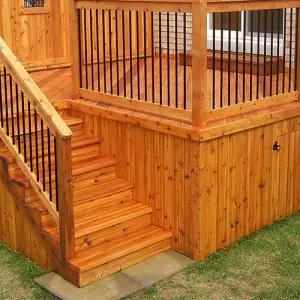
Sealing vs Staining a Deck: What’s the Difference?
Ask a Question
Send us a note and we'll get back to you — usually within one business day.
Sealing a deck means applying a mostly clear coating that repels water while leaving the wood’s natural colour on display. Staining a deck means applying a product with pigment, so the wood gets colour and UV protection along with moisture resistance. For most Toronto-area decks, a pigmented stain is the more durable choice, but a sealer can be perfect when you want a natural, bare-wood look.
Seal Tech Inc. has handled deck power washing, staining and sealing across Scarborough, Toronto, North York, Markham, Vaughan and the rest of the GTA for more than 15 years. Here is how the two options differ and which one tends to suit our weather.
What a Deck Sealer Does
A deck sealer is usually clear or only lightly tinted. Its job is to stop water from soaking into the boards, which is what leads to cracking, warping and splintering over time. Some sealers soak into the wood while others sit on top and form a film, but the goal is the same: a water-repellent barrier.
Sealers are popular on new or light-coloured wood, especially cedar, because they keep the grain visible. The trade-off is sun protection. A clear sealer does not do much to stop UV, so even a sealed deck can grey over a few summers. That is why sealers often need more frequent re-coats, particularly on south- and west-facing decks.
What a Deck Stain Does
A deck stain carries pigment, which is why it changes the colour of the wood. It comes in a range of opacities, from semi-transparent (a hint of colour with the grain still showing) to solid (an opaque, paint-like finish). The pigment is not just cosmetic — it absorbs and reflects UV, so stained wood keeps its tone longer than clear-sealed wood.
Stain also protects against water, either by soaking into the wood fibres or by forming a protective layer on top, depending on the formula. Because stains add colour, they do a better job of evening out weathered, blotchy or greyed boards. If your deck has been bare for a while, staining is often the better rescue.
If you have already decided on a stain, the next decision is the formula. See our guide to oil vs water-based deck stain for how each type handles GTA weather.
Sealing vs Staining: How to Choose
Both products protect wood; the difference comes down to colour, UV protection and how often you want to maintain the surface. These questions usually settle it:
- Do you want the natural wood grain to show? Choose a sealer, especially on new cedar or a mostly shaded, covered deck.
- Does the deck sit in strong afternoon sun? Choose a stain with pigment, because it blocks UV far better than a clear sealer.
- Is the wood already grey or uneven? A stain evens out the tone, while a sealer will leave the weathered look mostly as it is.
- Do you want to go longer between coats? Pigmented stains generally outlast clear sealers, especially through our winters.
Whichever you pick, preparation decides the result. The surface needs a thorough cleaning — and drying time — before any coating is applied. Seal Tech handles the power washing and preparation as part of the job, so the finish goes onto boards that are actually ready for it.
Why Preparation Matters
Sealer or stain, a coating only bonds as well as the surface underneath it. Boards that carry dirt, mildew, pollen or a flaking old finish will not hold a new product for long, and the flaws show through the fresh coat.
That is why the process starts with a thorough power wash, followed by enough drying time for the wood to release trapped moisture. Staining damp wood is one of the most common reasons a finish peels within a season or two. A few dry days before coating — not just a dry morning — make a real difference in the GTA’s spring weather.
If there is an old stain or sealer on the deck, the condition of that coating decides what comes next. A sound finish can often be cleaned and recoated, while a failing one may need stripping first. Ask us whether it suits your surface, because the existing coating is as important as the new one you choose.
What GTA Weather Does to Your Deck
Our climate pushes decks hard. In winter, meltwater soaks into the boards, then freezes overnight and expands. That freeze-thaw cycle is what opens small cracks and splinters, so keeping water out of the wood is the whole point of sealing or staining.
Road salt makes it worse. Salt gets tracked onto decks on boots and shovels, draws moisture in and speeds up greying. A rinse in early spring helps, but the coating underneath has to be doing its job first.
Spring brings long, wet stretches. Much of Scarborough and the GTA sits on heavy clay soil that drains slowly, so water can pool around posts, under low decks and at the base of stairs. Wood that stays damp rots faster, which is why drainage around the deck matters as much as the finish on top of it.
Summer is when UV does its damage. Bare or clear-sealed wood greys quickly in the sun, and south- and west-facing decks take the worst of it. That is the strongest argument for choosing a stain with pigment rather than a clear sealer.
Frequently Asked Questions
Can I stain over a deck that was previously sealed?
Sometimes, but the old sealer has to be in good enough condition to accept the new product. If the coating is worn, peeling or uneven, it may need to be cleaned or stripped first so the stain can bond. Ask us whether it suits your surface before you start.
Which lasts longer, a sealer or a stain?
Pigmented stains generally last longer than clear sealers because the pigment blocks the UV that breaks coatings down. Clear sealers still protect against water, but they need to be refreshed more often, especially on sunny decks.
Do I need to power wash before sealing or staining?
Yes. A clean, dry surface is essential for any coating to bond. Dirt, mildew, pollen and old flaking finish left on the boards will show through and shorten the life of the new product.
Can I apply a sealer over a stain for extra protection?
In some cases a compatible sealer can be applied over a stain for additional water resistance, but the two products need to work together. Ask us whether it suits your surface, because the existing stain’s type and condition decide whether that approach is worth it.
Seal Tech Inc. serves Scarborough, Toronto, North York, Markham, Vaughan and the rest of the GTA. Call (416) 966-4200 for a free written quote, and we will help you decide between sealing and staining your deck.