Why Concrete Sealer Cracks or Peels — and the Fix
Ask a Question
Send us a note and we'll get back to you — usually within one business day.
Concrete sealer most often cracks or peels because moisture, road salt or everyday wear has broken the bond between the sealer and the surface — or because the wrong sealer was applied in the first place. The fix starts with working out why the sealer failed, then cleaning and preparing the surface properly before putting down a sealer that suits your concrete and the GTA’s freeze-thaw weather. In most cases, failed sealer has to be removed and replaced, not simply coated over.
Why concrete sealer cracks or peels
A sealer is only as good as the surface it sits on. When the bond between the sealer and the concrete breaks down, you get the cracks, peeling edges and cloudy patches that GTA homeowners often notice a few seasons after sealing. The usual causes are:
- Moisture trapped underneath. If the concrete was sealed while it was damp, or if water rises up through the slab, the sealer can cloud, lift or peel as that moisture tries to escape.
- Too much sealer in one coat. A thick film is more likely to crack than a thin, even one. Heavy coats can trap moisture or solvent and form a brittle skin that cannot flex with the concrete.
- The wrong sealer for the surface. A film-forming sealer sits on top of the concrete, while a penetrating sealer soaks in. Using the wrong type, or a product that cannot handle the traffic the surface takes, invites early failure.
- Poor surface preparation. Dirt, oil, old sealer and efflorescence left on the concrete stop the new sealer from bonding.
- Everyday wear. Tires, shovels, patio furniture and foot traffic grind down the film. Once it thins, it starts to crack and peel at the edges.
Most failures are a combination of these. A driveway that is sealed over damp concrete in the spring, then hit with salt all winter, has two separate problems working against the sealer at once.
How GTA weather makes it worse
Southern Ontario’s seasons are hard on outdoor sealers. Conditions that a sealed driveway might shrug off in a mild, dry climate can break it down quickly here:
- Freeze-thaw cycles. Water that soaks into tiny pores freezes and expands through winter, then thaws in spring. That repeated push and pull can crack both the concrete and the sealer on top of it.
- Road salt. Salt and de-icer dissolve into meltwater and soak into porous concrete. The salt can spall the surface and break down a film sealer, especially near the curb and where cars drip as they sit.
- Spring rain and snowmelt. Toronto springs are wet. A surface that never fully dries is exactly where sealers cloud, blush and peel.
- Summer UV. Strong sunlight oxidizes many film-forming sealers over a few hot summers, leaving them dull, brittle and more likely to crack.
- Clay soil and drainage. Much of the GTA sits on clay that drains slowly. Where water pools against a slab or wicks up through it, moisture stays in contact with the sealer and can cause hazing, efflorescence or lifting. Good grading and drainage matter as much as the sealer itself.
Cracked, peeling or flaking — what you’re seeing
Different failures point to different problems, so it helps to look closely before you act.
Cracking. A network of fine cracks in the sealer usually means the film is too thick or too brittle for the movement of the concrete underneath. It can also follow existing cracks in the concrete itself.
Peeling. Loose edges and lifted sheets are a bond failure. Something stopped the sealer from sticking — moisture, dirt, old sealer or the wrong product for the surface.
Flaking and chalking. Small flakes or a chalky film are signs of wear and UV breakdown. The sealer is disintegrating rather than lifting in one piece.
Clouding or a white haze. Cloudiness often comes from moisture trapped under the sealer, while a white, crusty deposit is usually efflorescence — salts pulled to the surface by water moving through the concrete.
None of these are a simple “add another coat” problem. Coating over cracked or peeling sealer just puts a fresh layer on top of a failing one.
What to do before you reseal
The right sequence is to identify the cause, remove the failed sealer, clean the surface and only then apply a sealer that suits the material and the conditions. Skipping any step usually brings the same problem back within a season or two.
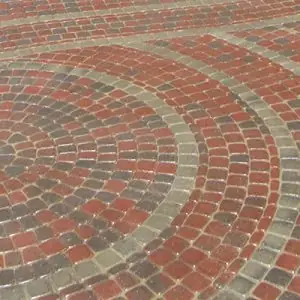
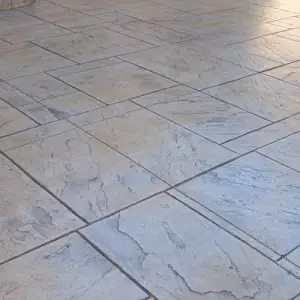
Removing old sealer takes care, because aggressive methods can etch or damage the concrete underneath. Once the surface is clean and fully dry, the new sealer can bond properly. Whether you need a penetrating sealer that soaks in or a film-forming sealer that sits on top depends on the material and the finish you want — our guide to penetrating vs film-forming sealers explains the difference. For natural stone and pattern (stamped) concrete, Seal Tech Inc. cleans and seals natural stone and pattern (stamped) concrete across the GTA.
Not every surface should be resealed, and not every failure can be fixed with sealer alone. If the concrete itself is badly spalled or cracked, or if you are unsure whether the old sealer can be removed safely, ask us whether it suits your surface.
Frequently Asked Questions
Can I just seal over cracked or peeling sealer?
No. New sealer needs to bond to the concrete itself, and a cracked or peeling layer underneath will only fail again. The old sealer has to be removed and the surface cleaned and dried first. Ask us whether it suits your surface.
Why did my sealer only last one winter?
In the GTA, a single winter is often enough to expose a weak bond. If the surface was damp when it was sealed, the sealer was applied too heavily or the wrong product was used, freeze-thaw and road salt will lift or crack it quickly.
Does peeling sealer mean my concrete is damaged?
Not necessarily. Peeling usually means the sealer failed, not the concrete. But if you can see pitting, spalling or cracks in the concrete itself, the surface may need attention before any resealing makes sense.
Can I fix a cracked sealer myself?
Small touch-ups are possible, but recoating over failed sealer tends to make the problem worse. Because the right fix depends on the cause, the material and the weather, it helps to have the surface assessed. Send photos with your quote request and Ryan can look at what is going on — ask us whether it suits your surface.
Seal Tech Inc. serves Scarborough, Toronto, North York, Markham, Vaughan and the rest of the Greater Toronto Area. Call (416) 966-4200 for a free written quote, or request a free written quote online.