Penetrating vs Film-Forming Sealers Explained
Ask a Question
Send us a note and we'll get back to you — usually within one business day.
A penetrating sealer soaks into the pores of a surface and protects from the inside out, while a film-forming sealer sits on top as a thin, visible coating. In plain terms, a penetrating sealer keeps the natural look of the stone or concrete and lets moisture escape, while a film-forming sealer builds a protective skin that darkens the colour, adds a gloss and blocks water on contact. The better choice depends on the material, the traffic it takes and the finish you want.
What a penetrating sealer does
A penetrating sealer is made to be absorbed. It sinks into the pores of concrete, pavers, natural stone or brick and lines them so water and dissolved salt have a harder time soaking in. Because the sealer does not sit on the surface, the material keeps its natural, matte look, and there is no film to scuff, cloud or peel.
This type of sealer is commonly considered for porous materials such as flagstone, limestone, sandstone and unpolished concrete. It slows water absorption, which is exactly what matters during a Toronto freeze-thaw cycle, and it makes oil and food spills a little easier to clean before they set. The trade-off is that a penetrating sealer offers less protection against surface staining, scuffing and traffic wear than a film, and it does not produce the darker “wet look” that many homeowners want on stamped concrete or interlock.
No sealer makes a surface fully waterproof or stain-proof. A penetrating sealer reduces how much water and salt get in, and it needs to be refreshed over time as the protection fades. Whether a penetrating sealer suits your surface depends on the material and its condition, so ask us whether it suits your surface.
What a film-forming sealer does
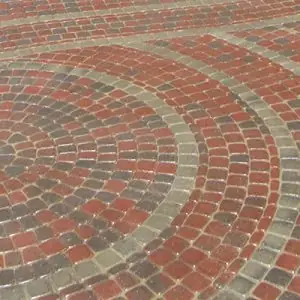
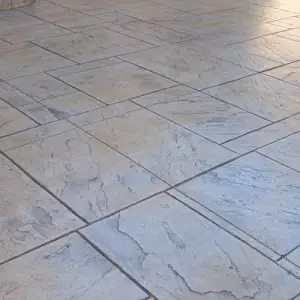
A film-forming sealer stays on the surface and cures into a clear, continuous coating — a thin skin over the concrete or stone. That skin is what creates the darker, richer colour and the glossy wet look that many GTA homeowners want on stamped concrete patios, interlock driveways and walkways. Because the film sits on top, it also takes the wear instead of the surface underneath it.
Film-forming sealers generally protect better against surface stains, scuffs and de-icing chemicals, and the smooth film is easy to sweep and wash. The trade-off is that the film can eventually wear, cloud or peel, especially where tires, shovels and road salt attack it. A film can also trap moisture if it is applied over a damp surface or if water moves up through the slab, which is why clean, dry conditions matter so much during application.
If you are weighing two popular film-forming products, our guide to acrylic vs polyurethane concrete sealer explains how they differ.
Penetrating vs film-forming: the key differences
Both products reduce water damage, but they go about it in opposite ways.
- Where they work. A penetrating sealer works inside the pores, while a film-forming sealer works on the surface.
- Appearance. Penetrating sealers keep a matte, natural look. Film-forming sealers darken the colour and usually add a gloss.
- Wear. A film sits on top, so it can scuff, cloud or peel over time. A penetrating sealer has no film to wear away.
- Water and salt. A penetrating sealer slows intake from inside; a film blocks water at the surface. Both help, but each fails differently when the protection wears thin.
- Recoating. Film-forming sealers are typically stripped or recoated on a schedule, while penetrating sealers are reapplied once the surface starts absorbing water again.
- Best fit. Porous stone and unpolished concrete often suit a penetrating sealer, while decorative or traffic-heavy concrete often suits a film.
Neither category is automatically better. The material, how the surface is finished and how much abuse it takes should drive the decision.
Choosing a sealer for Toronto-area conditions
Greater Toronto weather punishes outdoor sealers in specific ways. Here is what actually wears them down:
- Freeze-thaw cycles. Water that soaks into a surface freezes and expands through winter, then thaws in spring. Keeping water out of the pores with a penetrating sealer reduces that freeze-thaw strain on concrete and stone.
- Road salt. Salt and de-icer dissolve into meltwater and soak into porous surfaces, where they can cause spalling and white staining. A penetrating sealer helps keep saltwater out, while a film-forming sealer takes the salt on its own surface — which is harder on the film.
- Spring rain and snowmelt. Toronto springs are wet. A penetrating sealer lets trapped moisture escape, while a film can trap it and cloud or lift if the surface was damp when it was sealed.
- Summer UV. Strong sunlight dulls and oxidizes film-forming sealers over a few hot summers. Penetrating sealers are less visible, so fading shows less, but the protection still needs refreshing.
- Clay soil and drainage. Much of the GTA sits on clay that drains slowly. Where water pools against a slab or rises through it, moisture stays in contact with the surface and can cause efflorescence or a hazy look. Good grading and drainage matter as much as the sealer.
For a natural-looking flagstone walkway or limestone step, a penetrating sealer is often a sensible starting point. For a stamped concrete patio or interlock driveway where richer colour and a wet look matter, a film-forming sealer is usually the direction to consider. The finish and condition of the surface decide a lot, so ask us whether it suits your surface. Seal Tech Inc. cleans and seals natural stone and pattern (stamped) concrete across the GTA and can help you match the sealer to the surface.
Frequently Asked Questions
Which sealer lasts longer?
Both need maintenance, just in different ways. A penetrating sealer has no film to peel, but its protection fades as the surface starts absorbing water again. A film-forming sealer can wear, cloud or lift and usually needs stripping or recoating on a schedule. How long either lasts depends on traffic, salt and sun.
Can I put a film-forming sealer over a penetrating sealer?
Not reliably. The film needs to bond to the surface itself, and a penetrating sealer changes how that surface absorbs. If the old protection is sound, a professional can often test and decide the right next step; otherwise, cleaning and preparing the surface comes first. Ask us whether it suits your surface.
Will a penetrating sealer change the colour of my stone?
Usually very little. Because it soaks in and leaves nothing on top, the stone keeps its natural, matte look. A film-forming sealer is the one that darkens the colour and adds a wet-look gloss.
How do I know which sealer my driveway needs?
It comes down to the material, its finish and the traffic it takes. Interlock, stamped concrete, natural stone and plain concrete all behave differently, and Toronto’s salt and freeze-thaw add another layer. Send photos with your quote request and Ryan can look at the surface and recommend the right approach — ask us whether it suits your surface.
Seal Tech Inc. serves Scarborough, Toronto, North York, Markham, Vaughan and the rest of the Greater Toronto Area. Call (416) 966-4200 for a free written quote, or request a free written quote online.