Interlocking Brick Sealing: A Practical Guide
Ask a Question
Send us a note and we'll get back to you — usually within one business day.
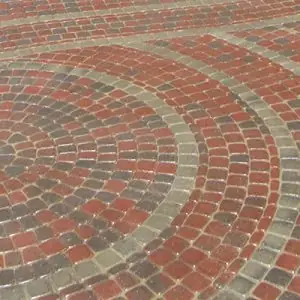
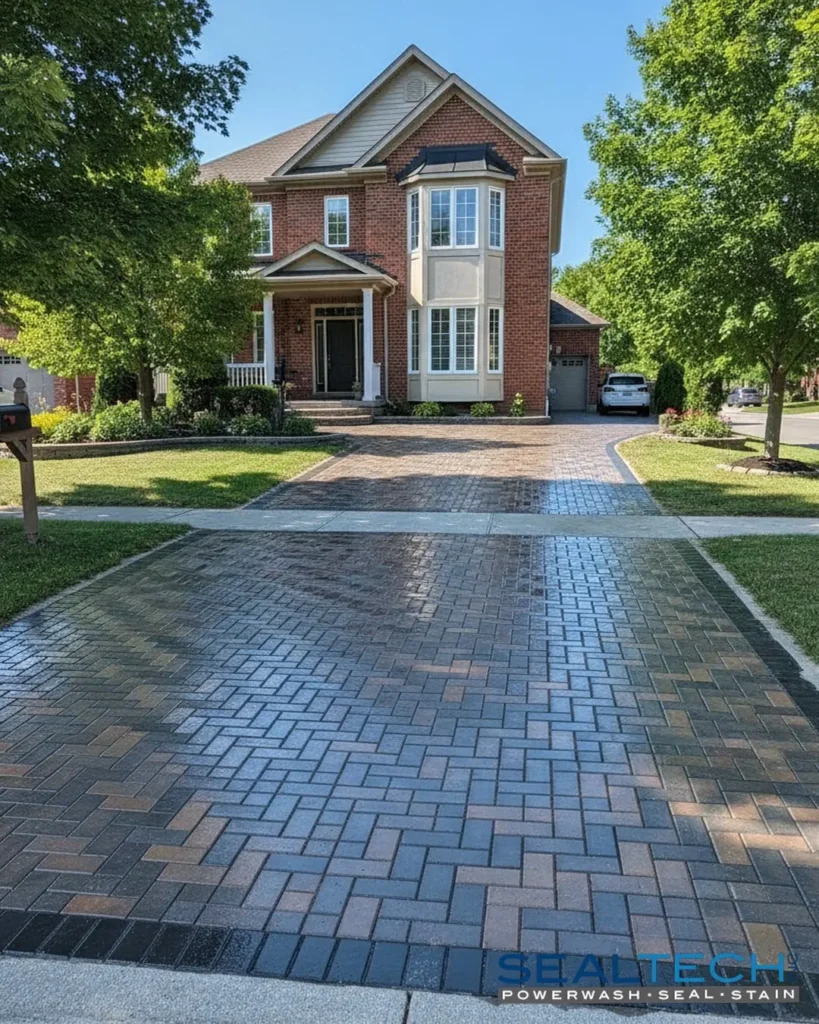
Interlocking brick sealing applies a clear or tinted sealer to paver stones and the sand between the joints. Done properly, it repels water and stains, keeps joint sand in place, and slows the cracking and shifting that GTA freeze-thaw cycles cause. Sealing will not repair a damaged base, but it is one of the most useful steps for keeping an interlock driveway, walkway or patio looking clean for longer.
What sealing actually does
Interlocking brick is built in two parts: the pavers on top and the sand that fills the joints between them. A sealer bonds to the surface of the pavers so that water, oil, food spills and road grime sit on top instead of soaking in. That makes stains easier to rinse away and slows the fading that comes from summer sun. Sealing also helps lock the joint sand together, which reduces the washing and weed growth that happen when sand erodes from the joints.
What sealing does not do is fix structural problems. If the base has settled or water is pooling because of poor drainage, a sealer will not correct that. The base and slope need to be sound first; the sealer protects the surface on top of that.
Why GTA weather is hard on interlock
Interlock in the Greater Toronto Area goes through a full cycle of stresses every year. Freezing and thawing is the biggest one. When water works into the joints and freezes, it expands and presses against the pavers. Over many winters, that repeated pressure can loosen stones and push them out of level. Spring rain adds more water at exactly the time clay-heavy soil drains slowly, so driveways and walkways can sit damp for longer than homeowners expect.
Road salt is a separate problem. Salt gets tracked onto driveways and walkways all winter. It attracts moisture and can leave a white, crusty residue that dulls the surface. In summer, strong UV light fades unsealed pavers and can leave older surfaces looking washed out. The seasonal threats that sealing helps manage include:
- Freeze-thaw cycles that loosen joints and shift stones
- Road salt and brine tracked in from the street
- Spring rain that saturates joints and slow-draining clay soil
- Summer UV that fades colour over time
When to seal interlocking brick
Newly installed interlock usually needs time to settle before sealing. Efflorescence — a white, powdery bloom that can appear on new pavers — should be gone first, and the surface should be fully cured. Sealing too early can trap moisture or lock in a haze. For existing driveways, walkways and patios, the best time to seal is after the surface has been thoroughly cleaned and the joints topped up with sand. A dry stretch of weather is ideal, because the pavers need to be dry for the sealer to bond properly.
Common signs that sealing is overdue include faded colour, stains that no longer rinse away, sand washing out of the joints, and weeds sprouting between stones. If you are unsure whether your particular pavers should be sealed, ask us whether it suits your surface — the right answer depends on the stone and its condition.
What a proper sealing job involves
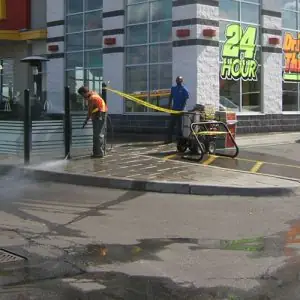
A worthwhile sealing job is mostly preparation. The pavers are power washed to remove dirt, mildew and old residue, and weeds are pulled from the joints. Once the surface is dry, joint sand is added and worked into the gaps; with interlock, re-sanding and sealing go hand in hand because the sealer helps hold that sand in place. The sealer is then applied evenly and left to cure. Traffic stays off the surface until it is dry, which protects the finish from footprints and tyre marks.
Not every product suits every paver. Some surfaces accept a clear sealer that keeps the natural colour, while others benefit from a finish that deepens the tone. Rather than guess, Seal Tech matches the approach to the stone, its age and how the area is used.
Sealing, cleaning and re-sanding work together
Sealing works best as the final step in a complete service. Cleaning removes what would otherwise be sealed into the surface, re-sanding restores the joints that keep pavers stable, and sealing protects the result. That is why our interlock driveway, walkway and patio cleaning, re-sanding and sealing service treats the job as one process rather than a quick coat over whatever is underneath. For homeowners who want to keep that finish lasting, we also recommend reading our guide to interlocking brick maintenance.
Frequently Asked Questions
How long does sealing last?
It depends on the product, the amount of traffic and how much salt and sun the surface sees, but sealing is a maintenance step, not a one-time fix. Plan on re-sealing as the finish begins to wear rather than waiting until stains set in.
Can I seal interlock myself?
You can buy sealers at hardware stores, but the result depends heavily on preparation. If the pavers are not cleaned and dried properly, or the joints are not re-sanded first, the sealer can lock in dirt and look uneven. Many homeowners prefer to have it done once, correctly.
Should new interlock be sealed right away?
Usually not. New pavers should settle and any efflorescence should clear before sealing. Sealing too soon can trap moisture or haze, so it is better to let the surface cure and then clean and seal it.
Will sealing stop weeds between the stones?
It helps. Sealing locks the joint sand together and reduces the gaps where weed seeds take hold, but no sealer makes a paver surface permanently weed-proof. Regular sweeping and prompt weed removal still matter.
Seal Tech Inc. serves Scarborough and the GTA, and we are happy to look at your driveway, walkway or patio before you commit. Call (416) 966-4200 for a free written quote, or contact us to send photos with your quote request.