How to Look After a Sealed Driveway
Ask a Question
Send us a note and we'll get back to you — usually within one business day.
A sealed driveway is easier to care for than a bare one, but it still needs a little regular attention. Keep water moving off the surface, rinse road salt away in the spring, sweep debris before it breaks down, and reseal before the old sealer is completely worn through. Do those four things and the sealer will keep protecting the surface through GTA winters and summers.
What sealing does for your driveway
Driveway sealer is a thin, sacrificial layer. It wears away slowly so the stone or concrete underneath does not. While it is doing its job, it helps rain bead and run off instead of soaking in, and it keeps dirt, oil and road grime from settling into the pores of the surface.
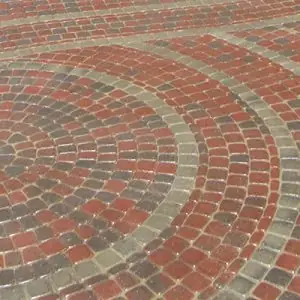
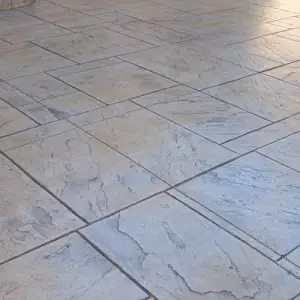
On an interlock driveway, the sealer also protects the sand packed between the pavers. That joint sand is what locks the stones together and stops them from shifting. When it washes out, the pavers move, and weeds and ants move in. On stamped concrete and natural stone, the sealer slows the chalky fade from the sun and makes routine cleaning much easier.
Sealing does not make a driveway maintenance-free. It reduces the work and stretches the time between bigger cleanings, but the surface still needs a few minutes of attention through the year.
What GTA weather does to a sealed driveway
Toronto and the surrounding area put a sealed driveway through more than most climates. Four things work against the sealer here, and they are the things to plan your upkeep around.
- Freeze-thaw cycles: Water finds its way into hairline pores and joints, then freezes and expands. Repeated freezing and thawing over a winter pushes the surface apart and loosens joint sand.
- Road salt and ice melt: Salt is carried onto the driveway by car tires and sits on the surface, where it can etch the stone and break the sealer down faster.
- Spring rain and clay soil: Heavy spring rain pools on the slow-draining, clay-heavy soil common across the GTA. Standing water keeps working on the joints and the sealer long after the rain stops.
- Summer UV: Long, hot summers bake the sealer and fade the colour, which is one reason protection drops off after a couple of years.
None of this means a sealed driveway fails overnight. It means the two upkeep jobs that matter most in the GTA are keeping water moving off the surface and getting the salt off once winter ends.
Simple care through the year
Most of the year-round care takes only a few minutes. A handful of habits make a sealed driveway last noticeably longer.
- Rinse road salt off in early spring, once the last snow has gone, so the residue is not sitting on the surface all summer.
- Sweep or blow off leaves, twigs and dirt before rain. Wet debris holds moisture against the surface and can stain it.
- Clean oil spots soon after they appear so they do not set into the sealer.
- On interlock, keep the joints full of sand. If you see sand washing out, the locking sand needs topping up before the pavers start to move.
- Watch where water ponds after a storm. A low spot or a downspout aimed at the driveway is a drainage problem, and sealing cannot fix it.
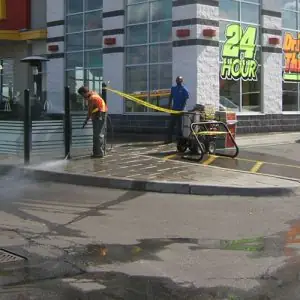
Everyday cleaning should be gentle. A stiff broom, a garden hose and mild soap are usually enough for routine dirt. Leave a thorough clean and seal to a proper job done at the right settings, so the surface is not damaged along the way.
Signs the sealer is wearing out
You do not need to wait for the driveway to look neglected. A few simple signals tell you the sealer has done its job and it is time to plan the next coat.
- Water no longer beads on the surface; instead it soaks in and darkens the stone or concrete.
- The colour looks chalky, grey or faded, even right after the surface is cleaned.
- Joint sand is washing out on interlock, or the joints look hollow.
- Weeds or ants are moving in between the pavers.
- The surface looks dull or “thirsty” in spots and holds water stains.
Catching these signs early matters. A driveway that is cleaned and resealed on time usually needs only a simple refresh. One that is left bare for a couple of winters often needs re-sanding or repairs first.
When to clean and reseal
Most sealed driveways in the GTA are ready for a fresh coat every two to three years, though full sun, a slope or heavy traffic can shorten that. Our guide on how often you should reseal interlock explains the timing in detail.
When the surface is due, the job is more than a coat of sealer. It starts with a proper clean, the joints are topped up with sand on interlock, and only then is the sealer applied. Seal Tech’s interlock cleaning, re-sanding and sealing service covers the full job on driveways, walkways and patios.
If your driveway is a different material, or you are simply not sure what it needs, ask us whether it suits your surface before booking.
Frequently Asked Questions
How often should a sealed driveway be resealed?
Most GTA driveways are ready for a fresh coat every two to three years. A driveway in full sun or on a slope may need it sooner, while a shaded surface with good drainage can sometimes go longer.
Can I pressure wash my sealed driveway myself?
Only at low pressure and from a safe distance, and only while the sealer is still in good shape. High pressure can cut through sealer, blast joint sand out of interlock and leave permanent stripes. If you are unsure, ask us whether it suits your surface before you try.
Why does water pool on my sealed driveway?
Water that ponds usually points to drainage, not the sealer. A sealer helps water run off, but it cannot move water uphill. On the clay-heavy soil common in the GTA, a low spot or a downspout aimed at the driveway is often the real cause.
Does road salt damage a sealed driveway?
Salt and ice melt sit on the surface and get tracked into the joints, where they can etch the surface and wear the sealer down faster. The simplest defence is a thorough spring rinse, so the residue is gone before the warm weather settles in.
Seal Tech Inc. serves Scarborough and the rest of the GTA, including Toronto, North York, Markham and Vaughan. Call (416) 966-4200 for a free written quote, or contact us to send photos with your request.