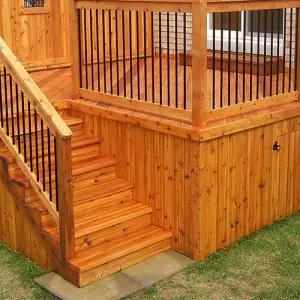
DIY vs Professional Deck Sealing
Ask a Question
Send us a note and we'll get back to you — usually within one business day.
Whether you should seal your deck yourself or hire a professional comes down to preparation, product choice and the condition of the wood. A small, lightly weathered deck can be a satisfying DIY project when you have a few dry days and the right materials. A larger, older or heavily weathered deck usually benefits from a professional, because the washing, sanding and coating steps are what really decide how long the sealer lasts.
What DIY deck sealing actually involves
Sealing a deck is much more than rolling on a coat of sealer. The wood has to be clean, dry and free of loose old coating, or the new product will not bond to it. Most DIY jobs start with washing the deck, often with a pressure washer, and then waiting for the boards to dry completely before anything is applied.
You also have to choose the right product for the wood and the look you want. Clear sealers let the natural grain show through but generally need more frequent re-application, while coloured stains hide the grain and give a more uniform finish. After that, the product has to be applied evenly, usually across a whole section at a time so the finish does not dry with lap marks or dark patches. Any boards that are cracked, cupped or soft should be replaced before you start. After the final coat, the deck needs time to cure before furniture goes back and foot traffic resumes, so plan around the weather forecast.
Where DIY deck sealing usually goes wrong
The most common DIY mistake is rushing the preparation. Sealer applied over dirt, mildew or old flaking coating can peel within the first year, and the fix is usually to strip everything and start over. Damp wood is the other big one. Sealing after rain or heavy morning dew traps moisture under the surface, which can make the finish cloud or fail early.
Product choice trips people up too. A sealer that works on cedar is not automatically the right fit for pressure-treated pine, and a product meant for a shaded deck may not hold up in full afternoon sun. Skipping a light sand after washing is also common; sanding opens the surface so the sealer can soak in evenly. If you are not sure whether a product suits your surface, ask us before you commit to it.
What a professional deck sealing job includes
A professional job follows the same general steps as a DIY project, but with more thorough preparation and better control over the finish. It usually starts with power washing and a close look at every board, rail and stair, followed by any sanding or repairs, and ends with the sealer or stain applied in the right conditions and left to cure.
That preparation is the part homeowners most often underestimate. A company that seals decks every week has the equipment to strip old coating, reach tight corners and cover a large deck within a single dry window. If you would like someone to handle the cleaning and coating, our deck and fence power washing, staining and sealing service covers the job end to end. The size, condition and product you choose drive most of the price — read what affects the cost of deck sealing in Ontario for a plain breakdown.
How GTA weather changes the decision
Southern Ontario weather punishes wood harder than a mild, dry climate does, and it shortens the window for getting the job done properly. Freeze-thaw cycles force moisture into the boards and then freeze it, which cracks wood and lifts old coatings. Spring rain and melting snow keep decks damp, so sealing has to wait until the wood has had a real chance to dry out.
Summer is when most sealing gets done, but strong sun and UV also fade and dry out unprotected wood, which is why the sealer or stain you choose matters. Road salt is an extra GTA problem all winter: it gets tracked onto boards near walkways and driveways and draws in moisture. Clay soil and poor drainage around many GTA homes can leave water sitting under a deck, keeping the wood wet long after the rain stops. A professional will usually spot and flag those drainage issues while assessing the deck — something easy to miss when you are doing the job yourself.
How to decide for your deck
A simple rule of thumb is that DIY can make sense for a small, sound, lightly weathered deck when you have a few consecutive dry days and are willing to do the preparation properly. It makes less sense for a multi-level deck, a deck that has greyed or peeled for years, or any deck with boards that need sanding, stripping or replacing.
Here is what tilts the decision toward professional help:
- The deck is large or multi-level, or has many railings and stairs
- The wood is heavily weathered, grey or flaking
- Boards are cracked, cupped or soft and may need replacement
- You only have a short stretch of dry weather to finish
- Water pools under the deck or drainage around it is poor
If any of those apply, money saved doing it yourself can disappear quickly if the finish fails and has to be redone. When in doubt, ask us whether your deck is a good DIY candidate.
Frequently Asked Questions
These are the questions GTA homeowners ask us most often about doing the job themselves.
How long does DIY deck sealing take?
A DIY job usually takes at least a couple of days once you include washing, drying time, sanding and application, and the wood has to stay dry the whole way through. A professional crew typically finishes the same deck in a day or two, depending on its size and condition.
Is it cheaper to seal a deck myself?
Materials are usually the smaller part of the job; the bigger cost is the time and labour of proper preparation. A DIY finish that fails early often costs more overall, because the deck has to be stripped and redone.
What happens if I seal over wet or dirty wood?
The sealer cannot bond to a damp or dirty surface, so the finish may cloud, peel or fail within the first year. The wood needs a full wash, a chance to dry and often light sanding before any product goes on.
Can I seal my deck in the spring?
You can once the wood is fully dry and temperatures are mild. Early spring is often too wet right after snowmelt, so wait for a run of dry days. Late spring through early fall is usually the most reliable window in the GTA.
Seal Tech Inc. serves Scarborough and the Greater Toronto Area. Call (416) 966-4200 for a free written quote, or contact us to send photos of your deck and we will get back to you.