How to Fix a Slippery Pool Deck
Ask a Question
Send us a note and we'll get back to you — usually within one business day.
A slippery pool deck is almost always a film problem, not a surface problem. Algae, sunscreen, soap residue or a too-glossy sealer builds up on top of the concrete, stone or wood, so the fix is to remove that layer and then add safe, lasting grip. Here is how to handle it properly in a Toronto-area yard.
Why pool decks get slippery
Wet, bare feet are only part of the story. Most pool decks turn slick because something is sitting on the surface rather than because the material itself has worn out. The usual culprits include:
- Algae and biofilm — shade, splashed pool water and slow drainage keep the deck damp long enough for a thin green or black film to form.
- Sunscreen, soap and tanning oil — these wash off swimmers, settle into the pores and become extremely slick when wet.
- Pool chemicals — chlorinated water that splashes out and evaporates leaves a fine residue behind.
- Leaves and pollen — decomposing organic matter turns into slime, especially through spring and fall.
- A worn, over-glossy coating — some older sealers are smooth and slippery even when the deck is dry.
Work out which one is doing the damage before you choose a fix. A deck that is simply dirty needs different care than one with a failing glossy coating.
Start with a deep clean and better drainage
Cleaning removes the film that makes the deck slick, so it is always the right first step. Use a cleaner matched to the material: a pH-appropriate cleaner for concrete and natural stone, and a wood-safe cleaner for a wooden deck. Power washing can speed things up, but it has to be done at the right pressure so the surface is not etched or damaged, which can make grip worse over time.
Drainage matters just as much, because standing water is what feeds algae in the first place. Much of the GTA sits on clay soil that drains slowly, so low spots can hold water for days after a spring rain. If water pools near the ladder or along the coping, look at regrading the area or redirecting downspouts away from the deck. Small depressions can sometimes be corrected; deeper settlement is a job for a professional.
Add texture or grip where it counts
Once the deck is clean and dry, add grip where people actually walk. The right option depends on the material, so test a small area or ask before committing:
- Anti-slip grit mixed into a compatible sealer or coating
- A textured deck coating made for pool surrounds
- A matte or low-gloss finish instead of a high-gloss one
- Non-slip strips or treads on steps and ladder entry points
- Rubber mats or textured tiles in the busiest spots
These products are not all suitable for every surface, so ask us whether a particular treatment suits your deck before you apply it.
Sealers and coatings: what actually works
A sealer does two jobs in a Canadian yard: it slows water from soaking into the deck, and it gives you a chance to build grip into the finish. That first job matters because of freeze-thaw cycling — water soaks in, freezes and expands, and slowly spalls or cracks concrete and stone. Road salt tracked from the driveway in winter, spring rain and strong summer UV all work against an unsealed surface, so a well-chosen sealer extends the life of the deck as well as making it safer.
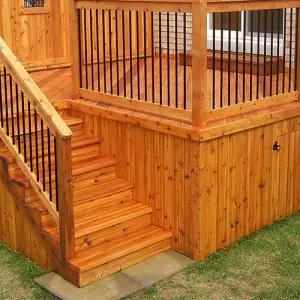
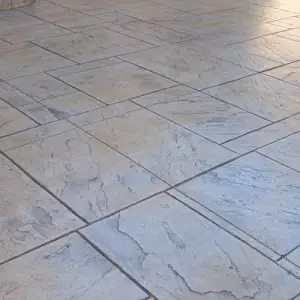
For natural stone and stamped concrete surrounds, a thorough clean followed by the right sealer restores both traction and colour. Our natural stone and stamped concrete cleaning and sealing page explains what that process involves. If your pool surround is wood, the same rules apply as for any deck: clean first, then choose a stain or sealer built for foot traffic — see our deck and fence staining and sealing service. If you are deciding between the two finishes, our guide to sealing versus staining a deck walks through the differences.
Keeping it safe through a GTA year
Pool decks in this climate need attention in every season. Spring rain shows you exactly where drainage is failing, so fix low spots while the ground is soft. Summer UV fades and breaks down finishes, which is why a matte sealer with a UV inhibitor is often the better long-term choice than a glossy one. Fall leaves should be swept up quickly so they do not decompose into slime. In winter, avoid harsh de-icers on the deck and rinse away road salt at the first thaw, because salt crystals speed up freeze-thaw damage at the surface.
Frequently Asked Questions
Can I just paint over a slippery concrete pool deck?
Usually not. Paint and many ordinary coatings sit on top of the film instead of removing it, and they can peel and become slicker as they wear. Cleaning and preparing the concrete first is what actually restores grip. Ask us whether a coating suits your surface before you buy one.
Is a glossy sealer more slippery than a matte finish?
Generally, yes. A high-gloss finish is smoother and shows a wet sheen, which makes it harder to keep footing when the deck is wet. A matte or low-gloss finish, ideally with a fine anti-slip grit worked in, is the safer choice for bare feet around a pool.
How often does a pool deck need to be resealed in Toronto?
It depends on the material, the finish and how much sun and salt the deck gets, so there is no single number that fits every home. Watch for the signs instead: water no longer beading, colour fading, or the surface feeling slick after a clean. When those appear, it is time to redo the sealer.
Will adding sand or grit make the deck rough on bare feet?
Not if the right size and amount is used. Fine anti-slip grit added to a sealer creates traction without turning the deck into sandpaper. Coarse aggregate is best reserved for driveways and heavy-traffic areas, not a pool surround where people walk barefoot.
Seal Tech Inc. serves Scarborough, Toronto, North York, Markham, Vaughan and the rest of the Greater Toronto Area. Call (416) 966-4200 or contact us online for a free written quote.