Flagstone Sealing in Toronto: A Homeowner’s Guide
Ask a Question
Send us a note and we'll get back to you — usually within one business day.
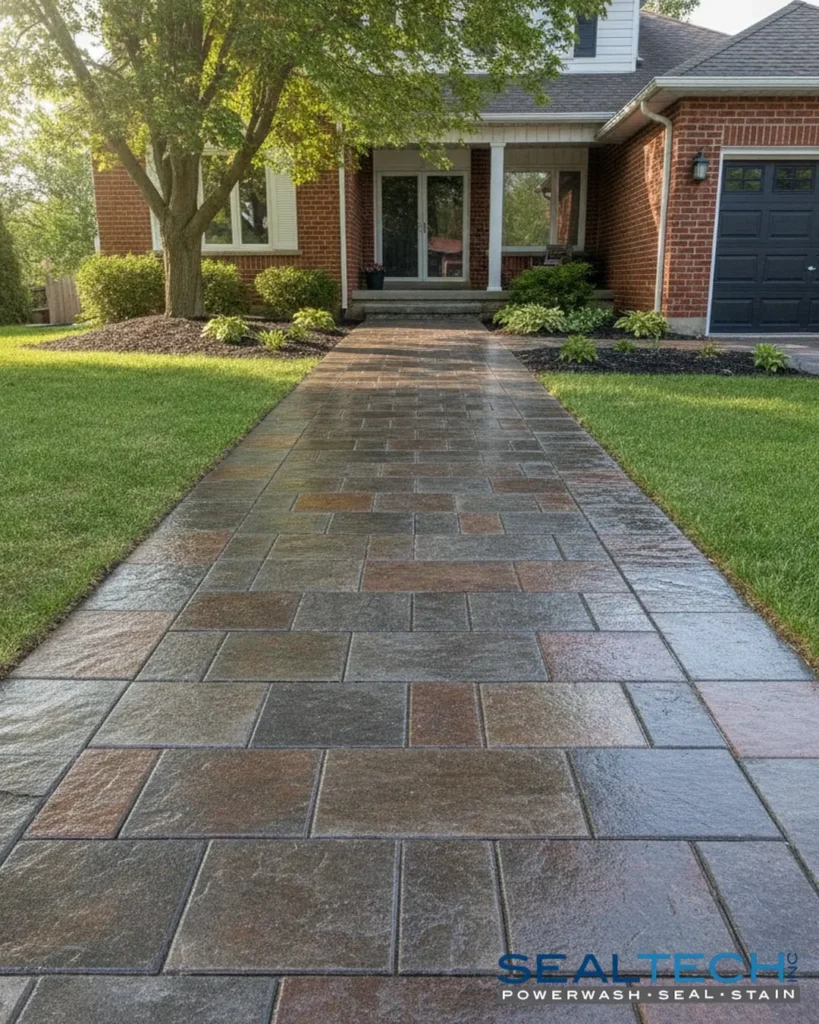
Flagstone sealing protects porous natural stone from the water, road salt and freeze-thaw cycles that damage GTA patios, walkways and steps. A breathable, penetrating sealer soaks into the stone, slows water absorption, and makes spills and grime easier to clean without leaving a plastic-looking film. This guide explains what flagstone sealing does, when it is worth doing in Toronto’s climate, and what a careful job should include.
What Flagstone Sealing Does (and Doesn’t Do)
Flagstone is porous by nature. Slabs are cut from layered natural stone, and every slab has tiny pores and mineral variations that absorb water at different rates. A sealer is a liquid treatment that reduces that absorption. On outdoor flagstone in a cold climate, the goal is usually a breathable, penetrating sealer: one that soaks below the surface and repels water while still letting trapped moisture escape as vapour.
What sealing does not do is fix the stone. It will not level cracked or loose slabs, repair missing joints, or turn damaged stone back into new stone. It also will not stop water from rising underneath the slab if the base stays wet — which is why cleaning, repairs and drainage come before the sealer, not after.
Why Toronto Flagstone Needs a Sealer
Flagstone in Scarborough, North York, Markham and the rest of the GTA faces a specific set of stresses, and sealing is the main defence against most of them:
- Freeze-thaw cycles. Water in the pores freezes and expands, repeating all winter; over time this can cause flaking and spalling.
- Road salt and de-icer. Salt gets tracked onto walkways and steps, draws moisture, and can leave white deposits that eat at the surface.
- Spring rain. Heavy rain on slow-draining clay soil means water pools and wicks up through the base long after the surface looks dry.
- Summer UV. Direct sun fades and dries out the stone, which can make colour enhancers and sealers wear unevenly.
- Clay soil and drainage. Older Toronto neighbourhoods sit on clay, which moves water slowly, so flagstone set over it stays damp at the base.
None of this means flagstone is fragile. It means the preparation has to match the site and the weather, not just the calendar.
The Right Order: Clean Before You Seal
The most common reason a sealer fails early is not the product — it is what was underneath it. A careful flagstone sealing job follows a sequence:
- Clean first. Remove dirt, moss, leaf tannins, weed growth and any old coating before anything new touches the stone.
- Repair what needs repairing. Cracked or loose slabs, missing joints and areas that hold water should be addressed first.
- Let the stone dry completely. Stone that is dry on top can still be wet underneath; trapped moisture is the top cause of haze and peeling.
- Test on a hidden spot. Flagstone slabs absorb at different rates, so a test patch shows how the stone will take the sealer.
- Apply in the right weather. Mild temperatures, no rain in the forecast and a dry base let the sealer cure properly.
If you are unsure whether a particular sealer is right for your stone, ask us whether it suits your surface before you commit.
Common Flagstone Sealing Problems
Most flagstone sealing problems show up in the first season and trace back to moisture, dirt or the wrong product:
- White haze or efflorescence. Minerals and salt work their way to the surface and get sealed in if the stone was not cleaned first.
- Patchy or blotchy colour. Slabs absorb sealer unevenly, especially when one area is damper or dirtier than the next.
- Peeling or flaking. A thick, film-forming sealer sits on top; frost and foot traffic lift it when moisture is trapped underneath.
- A slippery, glossy surface. A high-gloss film on a walking surface is a hazard in rain and snow; a low-sheen penetrating finish is usually safer.
Sealing vs. Staining: What Your Patio Needs
Sealing and staining are two different steps that get confused. Sealing changes how the stone resists water, salt and stains; staining (or colour enhancing) changes how it looks. A flagstone patio can need one or both, and the order matters: clean first, repair what needs repairing, enhance the colour if you want it deeper, then seal for protection.
Seal Tech’s natural stone and pattern concrete cleaning and sealing covers the cleaning and protection side, including flagstone patios, walkways and steps. If you are weighing a colour enhancer, our flagstone staining guide explains what works and what does not — and we can tell you whether a product suits your surface before you buy it.
Frequently Asked Questions
Does every flagstone patio need sealing?
Not every surface needs the same treatment, but outdoor flagstone in the GTA generally benefits from a breathable sealer because of road salt, freeze-thaw cycles and spring rain. A pro can look at your stone’s porosity and exposure and tell you whether sealing is the right step.
How long does flagstone sealer last?
Longevity depends on the sealer, how much the surface is walked on, and how the stone is cleaned and maintained. A sealed surface that still beads water is working; when it stops repelling water or looks dull, it is time to consider resealing.
Why does flagstone change colour when it is sealed?
Many sealers, especially colour-enhancing ones, deepen the stone’s natural tone the way wetting a stone does. That is why a test patch on a hidden corner matters — it shows the finished look before the whole patio is treated.
Can flagstone be sealed in any season?
No. The stone needs to be dry below the surface and the temperature needs to stay mild during curing, so a dry stretch in late spring or early fall is far more predictable than a hot, humid stretch in July. Ask us whether it suits your surface and schedule before booking.
Seal Tech Inc. serves Scarborough and the GTA. Call (416) 966-4200 for a free written quote, or reach us through the contact page.