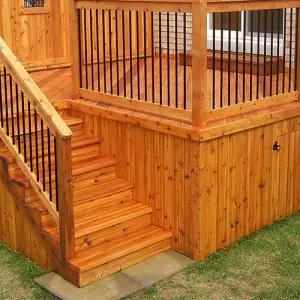
How to Choose a Deck Stain Colour
Ask a Question
Send us a note and we'll get back to you — usually within one business day.
The easiest way to choose a deck stain colour is to decide the look first — how much of the wood grain you want showing — then match a tone to your home’s exterior, and finally check it against your deck’s sun, shade and everyday use. For most GTA homes, a mid-tone such as cedar, walnut, honey or warm grey hides everyday dirt while still reading as wood. Work through the steps below and you will land on a colour you can live with for years.
Start With Opacity: How Much Wood Shows Through
Before you settle on a specific shade, decide on opacity, because it changes how any colour reads on your boards. A transparent or clear stain adds little or no colour and lets the natural wood do the talking. A semi-transparent stain tints the boards while the grain stays visible. A solid stain covers most of the wood, so the colour itself becomes the finish.
On an older deck where boards have greyed unevenly, a more opaque colour is often the safer choice: it covers patches and repairs so the whole deck looks consistent. If your wood is fresh or in good shape, a semi-transparent colour keeps that natural character while still carrying enough pigment to block UV. If you are torn between a solid look and one that lets the grain show, our guide to solid vs semi-transparent deck stain explains the trade-offs.
Match the Colour to Your Home and Fence
The stain should feel like part of the property, not a separate colour decision. Start with the fixed colours you cannot change easily: the siding or brick, the roof shingles, and the fence if it is already stained or painted. A deck in a warm brown or cedar tone usually sits comfortably beside brick, while a grey-toned or walnut shade can sit more quietly next to cool greys, black or white exteriors.
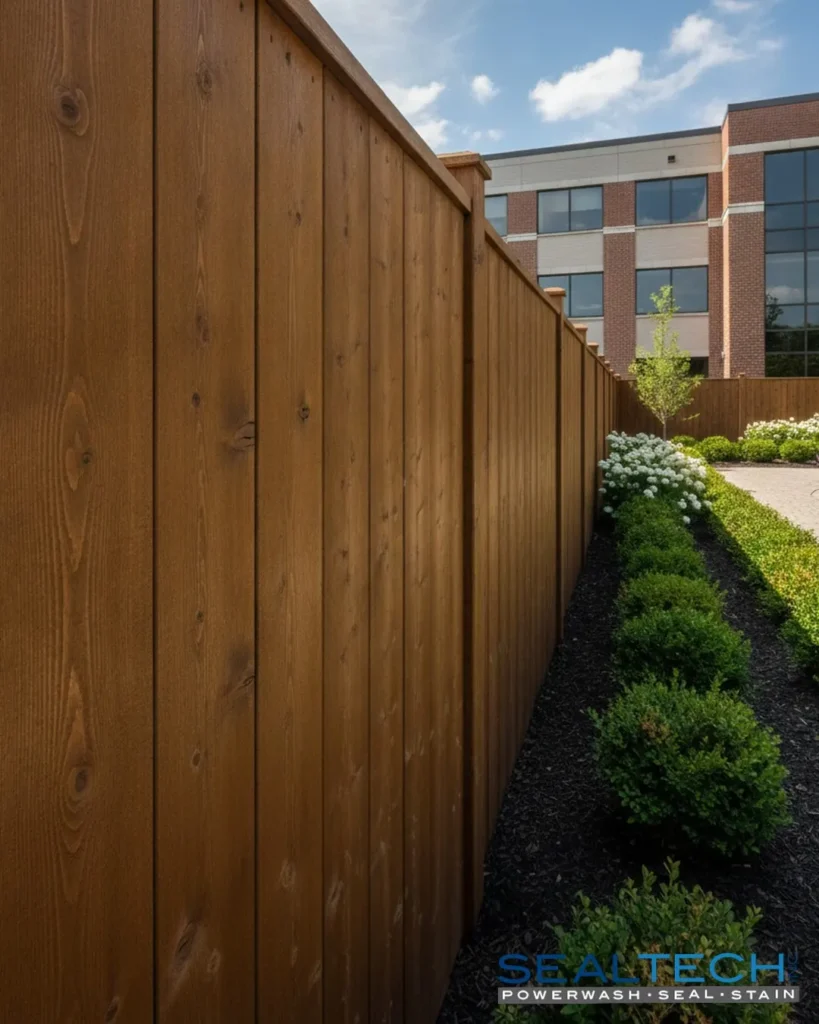
Pick one or two tones and repeat them. If the fence is stained a red-brown, a deck in a lighter or darker version of that same family keeps the backyard looking planned. You do not have to match exactly — a slightly different tone is often more interesting than a perfect match — but the two should look like they belong together.
Also think about what you see from the kitchen window in winter. A very light deck can look washed out against snow, while a deeper brown or charcoal gives the yard a bit of presence during the bare months.
Consider Sun, Heat and Everyday Use
Colour affects more than looks. Dark colours absorb more summer heat, and a south- or west-facing deck in full sun can become noticeably warm under bare feet; a mid-tone or lighter colour stays cooler on the hottest afternoons. If the deck wraps a pool or gets midday sun, that is worth factoring in before you commit.
Think about what lands on the deck each season. Light, solid colours show pollen, dirt and barbecue drips more than mid-tones, while very dark colours show dust and water spots after a dry spell. Mid-tones are popular across the GTA precisely because they forgive everyday wear.
Pigment also does real work. Stains with more colour block more UV, so a pigmented semi-transparent or solid colour resists the greying that comes with Toronto summers better than a nearly clear finish.
How Toronto Weather Changes How a Colour Ages
Your colour choice has to survive a harder year than a stain in a milder climate. In winter, snow melts into the boards and freezes overnight, and that freeze-thaw cycle works on the finish from the inside; a stain that is lifting or peeling shows every crack in the colour. Road salt gets tracked onto decks from boots and shovels and can draw moisture into the wood, which is one reason a light deck can look streaky by April if salt is not rinsed off.
Spring brings long wet weeks. On lots with the heavy clay soil common across Scarborough and the GTA, water drains slowly and can sit around posts and under low decks, so moisture often attacks from underneath even when the stain on top is fine. Keeping drainage clear matters as much as the colour you choose.
Through summer, UV is the main threat: it fades colour unevenly, so a mid-tone may soften toward grey on the sunny side first. A deeper initial colour tends to hold its look longer in full sun, because there is more pigment to lose before the change becomes obvious.
Test the Colour Before You Commit
Stain colours look different on a screen, in the store and on your actual boards, so test before buying enough for the whole deck. Apply the colour to a cleaned, dry offcut or a small hidden section, and look at it at different times of day. Wet wood reads darker, so what you see on a freshly washed board is not the final colour; wait for it to dry before judging.
Also remember that old wood and new wood take colour differently. A board that has greyed will hold more pigment and can go darker than a fresh board, and boards in the same deck can absorb at different rates. If the wood is uneven, a more opaque colour is the simplest way to get a consistent result.
Seal Tech Inc. has handled deck staining and sealing across Scarborough, Toronto, North York, Markham, Vaughan and the rest of the Greater Toronto Area for more than 15 years. We can show you how a colour will read on your specific wood, and we will tell you honestly when a shade that looks great in a photo will not suit your surface — ask us before you commit.
Frequently Asked Questions
Can I change the colour of an already stained deck?
Yes, you can usually go darker or shift the tone by cleaning the deck thoroughly and applying a compatible stain. Going much lighter is harder, because the old colour shows through, and a solid colour is often the cleanest way to make a big change. Ask us whether your surface suits the change before you buy product.
What stain colour lasts longest in full sun?
Deeper, more pigmented colours generally hold their look longer than pale or nearly clear finishes, because there is more pigment to resist UV. Even so, the right colour still needs the right product for your wood, so we match the stain to your boards rather than reaching for the same shade on every job.
Do dark decks really get too hot in summer?
They can. Dark colours absorb more heat, and on a south- or west-facing deck in full sun they can feel hot under bare feet. A mid-tone is a good compromise if you like depth but want the deck comfortable on hot afternoons.
Should the deck match the fence?
It does not have to match exactly. Staying in the same colour family looks planned, while a lighter or darker version of the fence tone usually works better than a perfect match. What matters most is that the two tones look intentional together.
Seal Tech Inc. serves Scarborough and the GTA. Call (416) 966-4200 for a free written quote, and we will help you choose a deck stain colour that looks right and lasts.