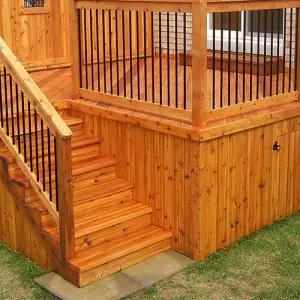
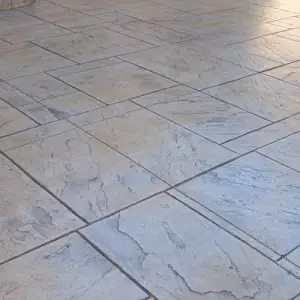
Solid vs Semi-Transparent Stain
Ask a Question
Send us a note and we'll get back to you — usually within one business day.
Solid stain covers most of the wood so the colour becomes the finish, while semi-transparent stain tints the boards and leaves the grain visible. Choose solid when you want a uniform, hard-wearing colour on weathered or patched wood; choose semi-transparent when the wood is in good shape and you want it to still read as wood. The decision comes down to the condition of your boards, the look you want, and how often you are willing to recoat.
What the Two Finishes Look Like
Solid stain sits at the opaque end of the spectrum. It carries enough pigment to cover the grain and most blemishes, so the deck reads as one even colour. It still soaks into the wood and wears differently from paint, but visually it behaves like a painted surface.
Semi-transparent stain sits partway between clear and solid. It adds colour, but the pigment is light enough that the grain, knots and natural variation stay visible. The result is a deck that looks like stained wood rather than coated wood.
If you are weighing your options, the quick comparison is:
- Solid stain: even, opaque colour that hides grain, repairs and greyed patches.
- Semi-transparent stain: tints the wood while the grain and character show through.
- Clear or transparent finish: little or no colour, for protection without changing the look.
Durability: How Long Each Finish Lasts
In general, solid stain holds up longer between coats than semi-transparent stain. That is not a product flaw — it is pigment. The more colour a stain carries, the more UV it blocks, and UV is what greys and breaks down wood finish through a Toronto summer. A solid colour simply has more pigment protecting the surface and itself.
A semi-transparent finish still protects, but it relies partly on the wood being in good shape underneath. Because the coating is thinner and less pigmented, it tends to weather toward grey sooner and usually needs attention more often, especially on a south- or west-facing deck that takes full afternoon sun.
That does not make solid stain automatically better. It makes it longer-lasting in one specific way. The trade-off is the look: a solid finish hides the very thing many homeowners want to keep.
Let the Condition of Your Wood Decide
The most honest starting point is the wood you already have. If your boards are newer, clean and fairly consistent, semi-transparent stain shows them off. If the deck has greyed unevenly, been patched with mismatched boards, or carries old finish that will not fully come out, solid stain is the more forgiving choice because it covers those differences instead of highlighting them.
Think of it as a question of confidence. When the wood is attractive on its own, semi-transparent lets it be the star. When the wood has a past, solid gives you a clean, consistent finish without replacing every board.
How Toronto Weather Tests Both Finishes
A GTA deck lives through a harder year than most stain pictures suggest, and the two finishes react differently to it.
Winter is the freeze-thaw test. Snow melts into the boards, then freezes overnight and expands. A solid film is thicker and sits more on the surface, so if moisture gets under it, the finish can lift or crack in a way you can see. A semi-transparent stain is thinner and more breathable, so it tends to wear away gradually instead of peeling in sheets — but that also means it loses protection sooner.
Road salt adds another winter job. Salt tracked in from boots and shovels draws moisture into the wood and can leave white marks and dry, streaky patches by April. Both finishes benefit from a spring rinse, and solid colour hides the temporary staining better than a semi-transparent tint.
Spring rain is the drainage test. Much of Scarborough and the GTA sits on heavy clay soil, so water drains slowly and can stand around posts and under low decks. Moisture attacks from underneath even when the top coat is fine, so grading and drainage matter as much as the stain you pick.
Summer is the UV test. Full sun fades colour and greys exposed wood. A solid stain holds its colour longer because there is more pigment to lose; a semi-transparent stain may soften toward grey on the sunny side first, which some owners like and others find uneven.
Maintenance and Recoating
Neither finish is maintenance-free. The practical difference is rhythm: a semi-transparent deck usually needs cleaning and recoating more often to hold its colour, while a solid stain goes longer between coats but the eventual refresh is a bigger job because you are working over an opaque film.
Prep matters more than the product on top. A clean, dry, sound surface is what lets either stain hold through its first winter, and that is where deck staining and sealing really starts — with the condition of your boards rather than a one-size answer.
Once you settle on opacity, the next decision is tone. Our guide to how to choose a deck stain colour walks through matching the shade to your house, fence, sun and everyday use.
Frequently Asked Questions
Is solid stain better than semi-transparent stain?
Not automatically. Solid stain lasts longer between coats and hides flaws; semi-transparent stain keeps the natural grain and is easier to refresh. The better choice is the one that matches your wood’s condition and the look you want.
Can I switch from semi-transparent to solid stain?
Usually, yes. The surface needs a thorough cleaning and, where the old finish has failed, proper prep so the solid stain can bond. Going the other way — from solid to semi-transparent — is harder, because the old colour has to come off before the grain can show again. Ask us whether your surface suits the change.
Which finish hides greyed wood better?
Solid stain. Its pigment covers greyed patches, repairs and uneven boards in one even colour. Semi-transparent stain tints the wood but still lets that variation show through.
How do I know which product is right for my deck?
Start with the wood’s condition and how much grain you want to see, then match the opacity to the exposure. A deck in full sun or heavy shade, on clay soil, or near a salted walkway may lean one way. We look at the actual surface and tell you honestly what will hold up.
Seal Tech Inc. serves Scarborough and the GTA. Call (416) 966-4200 for a free written quote, and we will help you choose the finish that suits your wood.