How to Fix Winter Salt Damage on Concrete
Ask a Question
Send us a note and we'll get back to you — usually within one business day.
Most winter salt damage on concrete is fixed in three steps: clean away the salt and loose material, repair any flaking or spalled spots, then reseal the surface so water and salt stop soaking back in. Light damage may only need a good cleaning and a fresh coat of sealer, while deeper scaling needs repair first. In the GTA, the fix also has to address what caused the problem — freeze-thaw, road salt and poor drainage — or the damage returns.
What winter salt actually does to concrete
Concrete is porous, so melting snow and road salt soak into the surface rather than sitting only on top. Salt itself does not dissolve concrete, but it does keep the surface wetter for longer. The real problem is freeze-thaw: water soaks in, freezes overnight and expands, and that repeated pressure pops and flakes the surface. Because salt keeps pulling in moisture and slows evaporation, it makes the freeze-thaw cycle happen more often than it would on a dry, clean surface.
Early salt damage usually looks like a whitish residue and a dusty or chalky surface. Left alone, it moves through several stages:
- A white or grey haze where salty water has dried on the concrete
- Fine dust or sand wearing off the surface
- Flaking or scaling, where the top layer begins to break away
- Pitting and small craters, often at edges and high-traffic paths
- Exposed stones or aggregate once the top layer has spalled away
The sooner it is caught, the simpler the fix. Surface haze and light scaling can usually be cleaned and resealed; once the aggregate is showing, there is more repair work involved.
Start by cleaning the surface
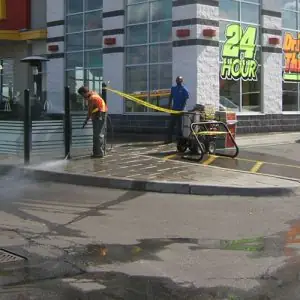
The first step is to get the salt off and let the concrete dry out. In late winter and early spring, sweep or rinse salty residue off driveways, walkways and patios so it does not keep sitting against the concrete. A stiff brush and water are usually enough for haze and light dirt, but the timing matters: wait until daytime temperatures stay above freezing so the rinse water does not refreeze inside the pores.
Cleaning is not just cosmetic. A new sealer bonds to the concrete itself, not to salt, dirt or an old failing coating. If the surface is not clean, the sealer will not hold. After washing, give the concrete a few dry days before anything else, because sealing over damp concrete traps moisture and shortens the life of the job.
Repair flaking and scaling before you seal
Where the surface has actually flaked, spalled or exposed the aggregate, sealing alone is not enough. The loose, crumbling material has to be removed down to sound concrete, and the pitted areas generally need to be patched so the surface is level and solid. Patching works best when the edges are clean and the damaged area is shaped so the repair material has something to key into.
Old, peeling sealer also has to be dealt with first. A fresh coat applied over a failing sealer will lift with it, so the old coating needs to be stripped or cleaned back before a new one goes on. If a slab is cracked from movement or shifting ground rather than surface freeze-thaw, the crack should be assessed separately, because a sealer will not hold a moving slab together. If you are not sure whether a particular patch or sealer is right for your surface, ask us whether it suits your surface.
Why resealing is the real fix in the GTA
Sealing does not make concrete waterproof, but it slows how much water and dissolved salt soak in, and that interrupts the freeze-thaw cycle that causes scaling. That is why a sealed driveway or walkway in the GTA generally comes through winter in better shape than bare concrete, and why the fix for salt damage almost always ends with a fresh coat of sealer.
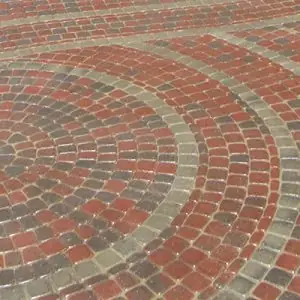
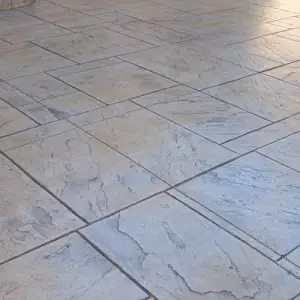
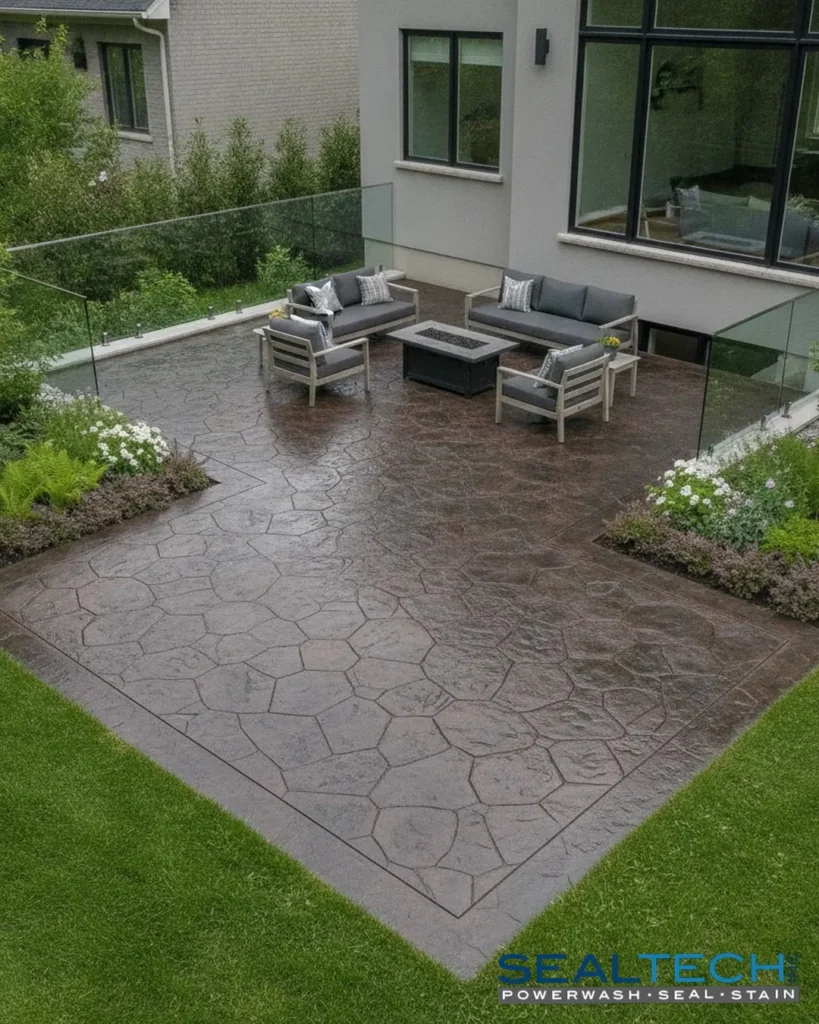
The same principle applies to patterned and stone surfaces. Natural stone and stamped concrete cleaning and sealing follows the same logic: clean the surface, repair what is failing, then reseal before another winter of salt and freeze-thaw. Colour and pattern surfaces show damage quickly when the sealer wears through, so they are worth watching closely.
Sealers wear down over time, so resealing is a repeating job rather than a one-time repair. Our guide on how long concrete sealing lasts in Ontario explains what shortens a sealer’s life and when to plan the next coat. Around Scarborough and the GTA, clay soil adds another layer to watch: it drains slowly and holds moisture against slab edges, so standing water in spring keeps the concrete wet long after the snow is gone. Where water pools or runs toward the house, the grading and downspouts need to be fixed as well, because a sealer cannot correct poor drainage. Spring rain and summer UV work on the surface from the other direction, washing in more water and slowly breaking down the sealer’s colour and protection.
How to slow the damage next winter
Once the concrete is cleaned, repaired and resealed, a few habits keep the next winter from undoing the work:
- Sweep or rinse road salt off the surface in late winter and early spring
- Use a plastic shovel rather than a metal blade, which scrapes the sealer and the surface
- Keep gutters and downspouts clear and pointed away from the slab
- Remove leaves and debris that trap moisture against the concrete
- Reseal before the old sealer is completely gone, not after it has failed
Most sealers also need a dry surface and a reasonable temperature to cure, so sealing is generally done in the warmer months. That makes late spring and summer the practical time to repair and reseal before the next round of road salt and freeze-thaw arrives.
Frequently Asked Questions
Can I fix salt-damaged concrete in the winter?
Not usually. Cleaning water can refreeze inside the concrete, and most sealers need a dry surface and above-freezing temperatures to cure. In the GTA, it is more practical to wait until spring, once the freeze-thaw cycle has ended and the slab can dry out.
Will sealing stop salt from damaging my driveway?
It will not make the concrete damage-proof, but it slows how much water and dissolved salt soak in, which is the main driver of scaling. Keep salt swept off and reseal before the old coat has worn through to get the most protection.
Do I need to remove the old sealer first?
Usually yes. A new sealer applied over peeling or failing sealer will lift with the old coat. The surface should be cleaned or stripped back so the fresh sealer bonds to the concrete itself.
Does salt damage always mean replacing the slab?
No. Light scaling and haze can often be cleaned and resealed, while deeper spalling may need patching. Replacement is only necessary when the damage runs deep enough that the surface can no longer be repaired. Ask us whether it suits your surface, and we will tell you what your concrete actually needs.
Seal Tech Inc. serves Scarborough and the Greater Toronto Area. Call (416) 966-4200 for a free written quote, or reach us through our contact page.