How Long Does Concrete Sealing Last in Ontario?

Ask a Question
Send us a note and we'll get back to you — usually within one business day.
On a driveway, walkway or patio in the GTA, a well-applied concrete sealer typically lasts somewhere around two to five years before the surface needs cleaning and a fresh coat. Penetrating sealers can protect longer, while surface coatings that carry traffic, road salt and summer sun often wear sooner. The exact lifespan comes down to the product, how the concrete was prepared and how the surface is used, so treat the range as a planning guide rather than a promise.
What affects how long a sealer lasts
Concrete is porous, and sealing works by slowing the water, salt and stains that soak into the surface. How long that protection holds depends on several things at once: the type of sealer, the number of coats, how the surface was cleaned and dried before sealing, how much sun and foot or vehicle traffic it gets, and whether water is allowed to sit on it.
A penetrating sealer soaks into the concrete and works from within, so it often outlasts a film-forming sealer that sits on top. Film-forming sealers, including the wet-look and colour-enhancing products many homeowners choose for stamped concrete, protect well but wear down as the surface is walked on, driven on and exposed to the elements. Both types fail early if they are applied to dirty, damp or poorly prepared concrete.
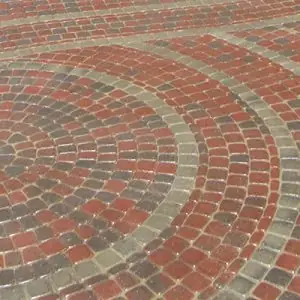
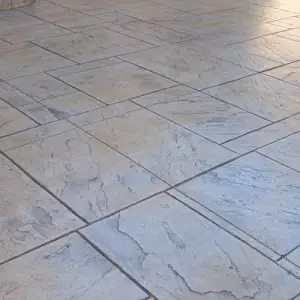
The same rule applies to natural stone and stamped concrete cleaning and sealing: the sealer is only as good as the preparation underneath it. Colour and pattern surfaces show wear quickly when a sealer starts to fade or lift.
Why Ontario winters are hard on sealed concrete
Freeze-thaw is the biggest test. Water works its way into the tiny pores in the concrete, freezes overnight and expands. That pressure is what causes surface flaking, hairline cracks and scaling over time. A sealer slows that water absorption, which is why a sealed driveway or walkway generally comes through an Ontario winter in better shape than bare concrete.
Road salt and de-icer make it worse. Salt draws in moisture and keeps the surface wet longer, so the freeze-thaw cycle repeats more often. On a sealed surface, salt sits on top where it can be washed or swept away; on bare concrete, it is driven into the pores. Driveways, aprons and walkways near the road see the most salt, so they tend to need resealing first.
Winter also punishes the edges. Plows, shovels and ice scrapers wear down the finish, especially along the driveway edge and wherever boots turn. A sealer that is already thin from years of sun will show that wear faster.
Spring rain, summer sun and clay soil
Spring is the season of standing water. After the snow melts, rain pools in low spots and against the edges of slabs. Much of Scarborough and the surrounding GTA sits on clay soil, which drains slowly and holds moisture against concrete for days. Water sitting on a surface, or pressing up against it from below, shortens the life of any sealer because constant moisture works at the bond between the sealer and the concrete.
Summer UV is the quieter threat. Sun breaks down the resins in a sealer, dulls the colour and leaves the surface looking chalky or grey. A sealer with UV resistance holds its look longer, and a sensible resealing schedule keeps the colour from fading so far that the surface needs deep cleaning just to come back.
Good drainage matters as much as the sealer itself. If water pools on your patio or runs toward the house, the grading should be looked at separately, because a sealer cannot fix poor drainage. Asking a sealer to do that job just means resealing sooner.
Signs it is time to reseal
The easiest way to know is to watch how water behaves. If rain no longer beads up and instead soaks in and darkens the concrete, the sealer is wearing thin. Other signs to look for:
- Water soaks in rather than beading on the surface
- The colour looks faded, chalky or uneven compared with sheltered spots
- Stains from oil, leaves or rust start to set in instead of wiping off
- The surface looks dry or dusty, or a fine sand keeps wearing off
- Edges and high-traffic paths look dull while the rest still has a sheen
You do not need to wait for every sign. If a surface that used to bead water now absorbs it, that is usually the cue to book a cleaning and resealing before winter salt does more damage.
How to get the longest life from a sealer
Most of a sealer’s life is decided before it is applied. Concrete that is properly cleaned, repaired and allowed to dry takes a sealer far better than concrete that is quickly washed and coated. Old, peeling sealer has to be removed first, because a new coat will lift with the old one. The product also has to match the surface and how it is used, because a product made for a sun-exposed patio is not necessarily the right choice for a salt-covered driveway.
A few simple habits stretch the time between resealings:
- Keep the surface clear of leaves and debris that hold moisture
- Rinse or sweep salt off the concrete in late winter and early spring
- Clean up oil, gas and food stains before they soak in
- Keep gutters and downspouts moving water away from the slab
- Book the next sealing before the old one is completely gone, not after
If you are not sure whether a particular slab or paver can be sealed, ask us whether it suits your surface, and we will tell you what we would and would not apply. Our guide on what affects the cost of concrete sealing in Ontario walks through the factors that shape the price of a job.
Frequently Asked Questions
How often should I reseal a concrete driveway in Ontario?
Most driveways in the GTA do well with resealing roughly every two to five years, depending on salt exposure, sun and traffic. Watch for water soaking in instead of beading, which is the clearest sign the surface is ready.
Does sealing stop concrete from cracking?
No. A sealer slows water absorption and surface wear, but it will not prevent or repair cracks caused by movement, freeze-thaw or shifting ground. Cracks should be assessed and repaired before sealing so the sealer goes onto a sound surface.
Can I seal concrete in the winter?
Generally not in Ontario. Most sealers need a dry surface and a workable temperature range, so sealing is done from late spring through early fall. Cold, rain and early frost keep the product from curing properly.
Will resealing fix a faded or blotchy finish?
Often it helps, but only if the old sealer is properly cleaned or removed first. A fresh coat over a failing sealer will lift with it. Ask us whether it suits your surface, and we can tell you what preparation the concrete actually needs.
Seal Tech Inc. serves Scarborough and the Greater Toronto Area. Call (416) 966-4200 for a free written quote, or reach us through our contact page.